
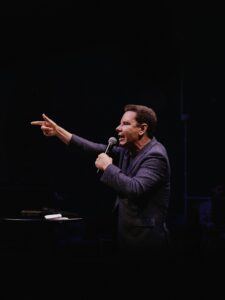
The line between public speaking and facilitation is thinner than it appears. While speakers are often associated with stages and facilitators with workshops, both roles share a common purpose: guiding an audience toward understanding. When done well, facilitation becomes a form of public speaking, and strong speakers can potentially become effective facilitators.
Speaking Beyond the Stage
A workshop facilitator may not stand behind a lectern, but the fundamentals of speaking still apply. Clarity of thought, structured delivery, and presence are essential. Participants look to the facilitator not just for content, but for direction. The way ideas are framed, transitions are handled, and questions are addressed mirrors the skills of a public speaker. In this sense, facilitation is simply speaking in a more interactive environment.
Engaging Through Interaction
Unlike traditional speeches, workshops rely heavily on dialogue. Yet interaction does not replace speaking; it amplifies it. A facilitator must introduce concepts clearly, set expectations, and summarise insights as they emerge. This requires the same discipline as speech-making, with the added complexity of responding in real time. The facilitator speaks less continuously, but with greater precision. Each explanation, prompt, or clarification must move the group forward without losing focus.
Balancing Authority and Openness
The most effective speaker-facilitators strike a careful balance. They project authority without dominating discussion, and they encourage participation without surrendering direction. This balance is rooted in public speaking fundamentals. Voice control, pacing, and confident body language establish credibility. At the same time, listening becomes as important as speaking. The facilitator adapts delivery based on group response, ensuring that learning remains aligned with the intended outcomes.
A workshop facilitator is not a lesser speaker, nor is a speaker ill-suited to facilitation. The roles complement each other. When speakers embrace facilitation skills, and facilitators recognise their role as speakers, both become more effective. The result is learning that feels guided, engaging, and purposeful, whether delivered from a stage or within a circle.

Leave a Comment